Pinarello’s New Gravel Race Machine and the Great Gravel/XC Mash-Up
Gravel used to be a clean little corner of the bike world. You bought a drop-bar bike with room for bigger tires, you pointed it at dirt roads and farm tracks, and you enjoyed feeling slightly rebellious for doing “road riding” somewhere that wasn’t a road. Simple.
Now? Gravel is a full-on identity crisis and Pinarello’s newest move lands right in the middle of it.
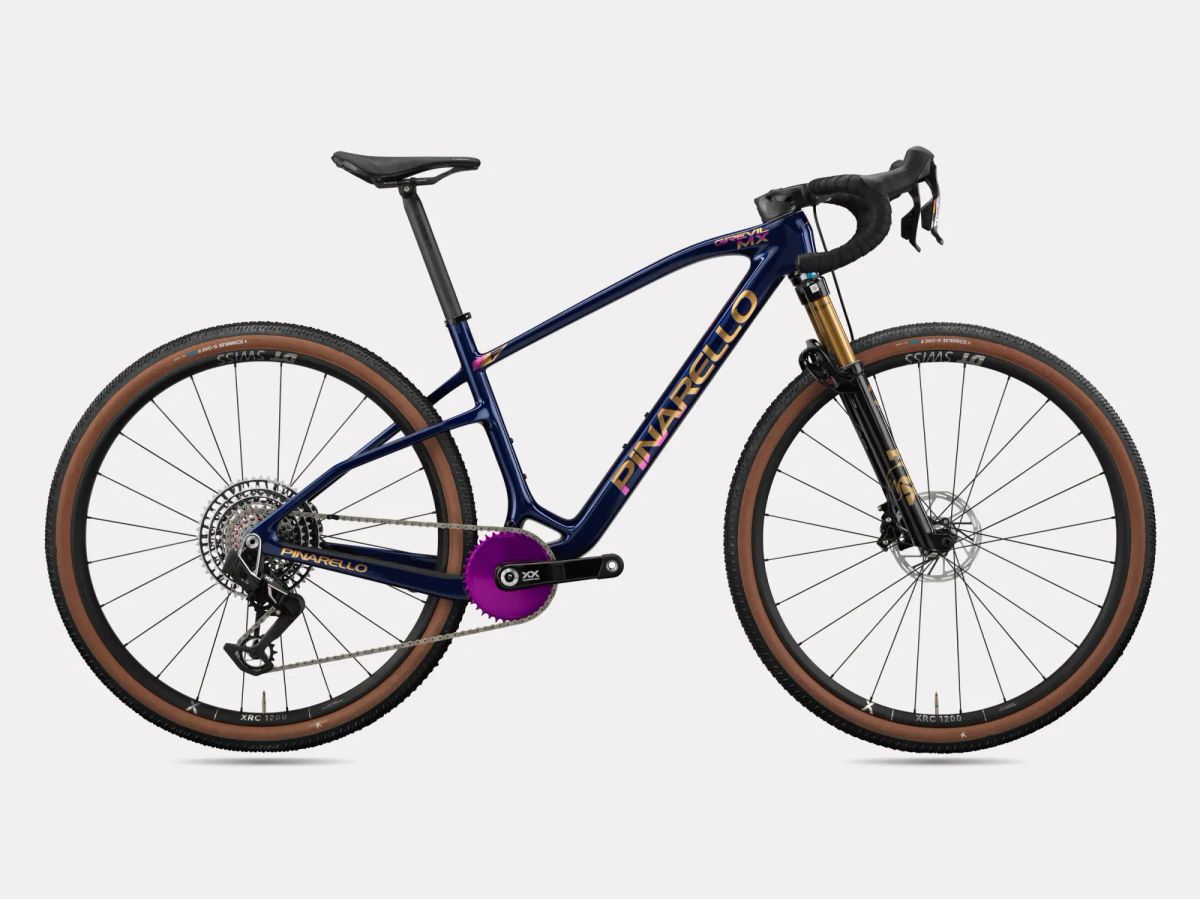
With the GREVIL MX, Pinarello isn’t chasing “one bike to do everything.” This is a gravel bike that openly wants to be a race bike first: light, aerodynamic, and built for high-speed gravel events where the pace is relentless and the margin between hanging on and getting spat out is measured in watts.
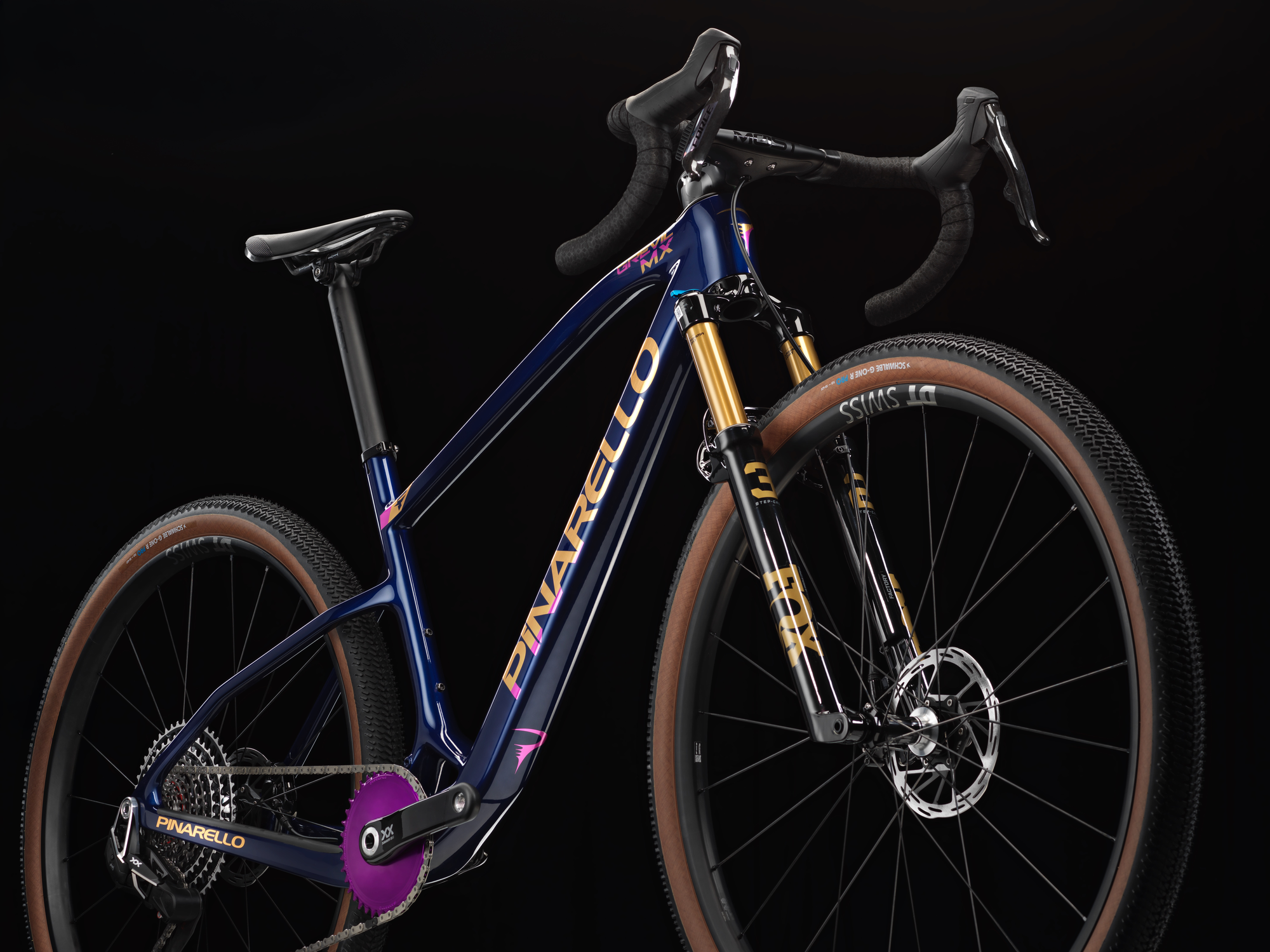
Pinarello’s message gets even clearer when you look at what sits next to it in their lineup. Between the lines, Pinarello is saying what the market has been hinting at for a while: “gravel” has split into two subcultures: pure speed on one side, long endurance on the other.
And that’s where the bigger story starts, because this isn’t just Pinarello being Pinarello. This is the whole industry watching the same trend play out and trying to monetize it.
The line between gravel and XC is getting hard to see
If you’ve been paying attention to what riders actually race and what they actually ride none of this is surprising. Gravel events have been creeping toward rougher terrain for years. Tire sizes have ballooned. Course designers learned that a bit of chunk makes the photos better and the social posts louder. Riders learned that traction and comfort aren’t just “nice to have,” they’re speed.
At the same time, XC mountain bikes have been pulled in the opposite direction. Modern XC rigs are light, efficient, and brutally fast on anything that resembles a climb. They’ve also become so capable that a lot of what used to be “sketchy” now feels routine. Short travel, fast rolling tires, steep seat angles—XC bikes are basically hardwired for momentum.
So you end up with this weird overlap: gravel bikes getting more mountain-bike-ish, and XC bikes getting more road-bike efficient. The middle ground has never been more crowded.
And then you see the plot twist: some riders start showing up to MTB events on drop bars, hunting aero gains and extra hand positions. That experiment got loud enough that organizers had to step in. When a major series says “no drop bars” for certain MTB races because of safety and course dynamics, it’s proof that the categories are colliding in real time.
The uncomfortable truth: “new categories” are a sales strategy
Here’s the cynical read, and it’s not totally unfair: manufacturers have discovered that the overlap between gravel and XC is a goldmine. Not because the overlap is brand new, but because it’s easy to repackage.
Instead of building one truly versatile platform with meaningful adjustability, they can slice the market into micro-segments and sell you a fresh dream each time.
Fast gravel. Endurance gravel. Rough gravel. Race gravel. Gravel that’s basically XC. XC that’s basically gravel. Sprinkle in a new bar shape, a new “system,” a new story about efficiency or comfort, and suddenly the same rider feels like they’re under-biked or over-biked depending on the week.
That’s where the “lazy innovation” accusation starts to stick. Not because engineers stopped engineering, but because marketing departments figured out how to turn convergence into a product plan.
A lot of the differences between these bikes don’t live in the frame at all. They live in the build kit and setup.
Swap tires, change gearing, alter bar width, nudge stack height, play with stem length, and two bikes that look like different species in the catalog start to feel suspiciously similar on the road. Riders are realizing that the “new bike” they’re being sold is sometimes just another route to the same destination.
Tire clearance is the tell
If you want to cut through the noise, look at tire clearance and geometry, then ask what kind of terrain you truly ride.
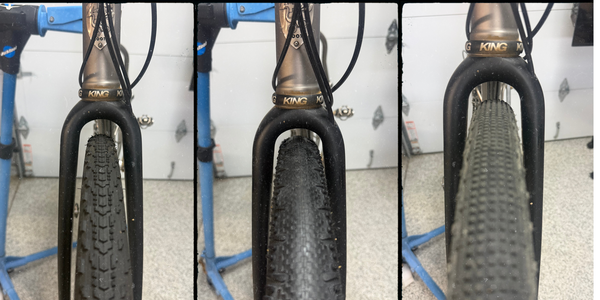
A bike capped around the low-to-mid 40s in tire width is usually speaking a certain language. It’s optimized for speed on smoother gravel, maybe some rough sections, but it isn’t designed to float through chunky trail like a short-travel MTB.
And specificity can be great, until it’s used to create artificial urgency. Because the moment you convince a rider that “their” gravel includes occasional singletrack, you can push them toward a different SKU. One more bike. One more “solution.” One more hit of novelty.
So what should riders do with all this?
First, don’t get mad at the bikes. Some of the best bikes ever made are coming out right now, and gravel race bikes are a big part of that. The speed is real. The handling is better. Comfort has improved. Tire technology is absurdly good. There are very few genuinely bad options at the performance end of the market.
Get mad at the confusion. Get skeptical about the stories.
If you ride predominantly hardpack, dirt roads, and fast gravel events, a bike like the DOGMA GR is a logical tool. If your “gravel” routinely turns into rock gardens and steep, loose descents, you might be happier on a platform that looks a little more MTB-adjacent, or you might even be an XC rider who keeps trying to convince themselves they’re “gravel.”
And that’s the punchline: half the time, the bike you want is less about genre and more about honesty. About admitting what your rides actually look like.
Because the lines are blurring. They’ll keep blurring. Brands will keep leaning into it.
Pinarello’s DOGMA GR is a sharp example of the current era: a gravel bike that’s proud of being fast, proud of being race-driven, and perfectly timed for a world where “gravel” and “XC” aren’t separate boxes anymore. The tricky part is making sure you’re buying a bike because it fits your riding—not because a marketing department convinced you that overlap is a brand-new invention.