Gravel tires keep getting bigger, and MTB rubber is now part of the conversation
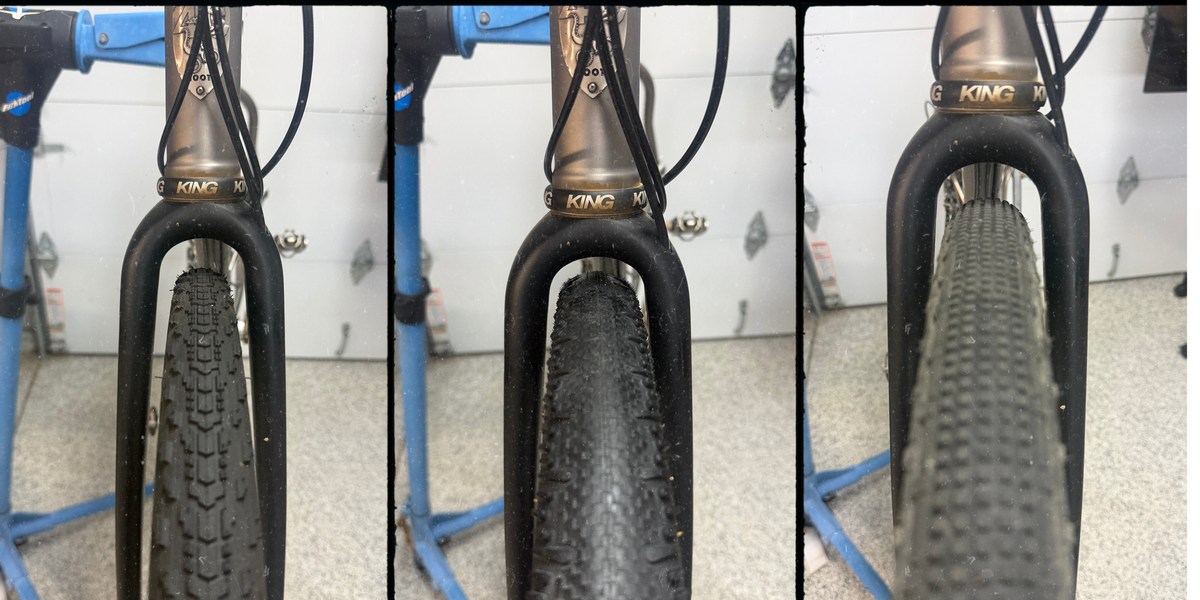
If you’ve shopped gravel tires lately, you’ve probably noticed how quickly the “normal” size has moved. What used to be considered wide in gravel has become the baseline, and more riders are now choosing 45mm and 50mm tires as everyday options. In the same breath, it’s no longer weird to hear someone ask, “Can I run MTB tires on my gravel bike?” because on the right frame, the answer is often yes.
This shift isn’t just trend-chasing. It’s a response to the way gravel riding has evolved. Routes have gotten rougher, average speeds have crept up, and the line between gravel and XC terrain has blurred. Tire volume is the simplest, most noticeable way to change how a gravel bike feels on real ground.
Why gravel tire width keeps increasing
A gravel tire has two jobs: roll efficiently and keep the bike composed when the surface stops cooperating. As riders pushed farther into chunky gravel, washboard, loose corners, and rocky descents, the second job started to matter just as much as the first.
A wider gravel tire lets you run lower pressure without turning the tire into a floppy mess. That matters because lower pressure does more than add comfort. It reduces vibration, helps the tire conform to uneven surfaces, and improves grip when the bike is loaded in a corner or under braking. If you’ve ever felt your hands go numb on washboard or watched your front end skate across marbles, you’ve felt the limits of too little volume.
The bikes also changed. More gravel frames now offer clearance for 700x45, 700x50, and even larger, and wheel rims have trended wider internally, which supports bigger tires better. Once the hardware made it easy, riders started experimenting, and the average tire size followed.
Are wider gravel tires faster?
This is where the conversation gets nuanced, and it’s why “best gravel tire width” is such a common search.
On smooth surfaces, narrower tires can still feel quicker, especially on pavement. Aerodynamics and weight can matter more, and you may prefer the sharper, livelier feedback of a smaller tire.
On rough gravel, speed is often limited by control. If you’re getting bounced off your line, backing off in corners, or constantly bracing instead of pedaling, you’re losing time. More volume can reduce that chaos. The bike tracks straighter, you stay seated longer, and you’re more willing to carry speed into rough sections. In practice, that can make a wider tire faster on the types of gravel most people actually ride.
A useful way to think about it: narrower can win on “fast dirt road” gravel. Wider often wins when the surface is broken enough that comfort and traction become performance.
45mm vs 50mm gravel tires: which is better?
If you’re searching “45mm vs 50mm gravel tires,” you’re usually trying to solve one of two problems: you want more comfort and grip, or you want more confidence when the terrain gets unpredictable.
For a lot of riders, 45mm is the sweet spot. It’s wide enough to noticeably improve comfort and traction over 40–42mm, but it typically keeps the bike feeling responsive, especially on mixed rides with pavement links.
50mm starts to shine when the route gets rougher more often than not. If your gravel includes chunky descents, deeper loose sections, or repeated washboard, 50mm can take the edge off in a way you feel immediately. It also gives you more room to tune pressure for grip without flirting with rim strikes.
The catch is that 50mm can be more sensitive to setup. Rim width, casing stiffness, and pressure matter more, and some bikes begin to feel slightly slower or less snappy on long pavement stretches. If your rides are truly 50/50 gravel and road, you’ll usually want a fast tread pattern in these widths to avoid that tractor-tire sensation.
Can you put mountain bike tires on a gravel bike?
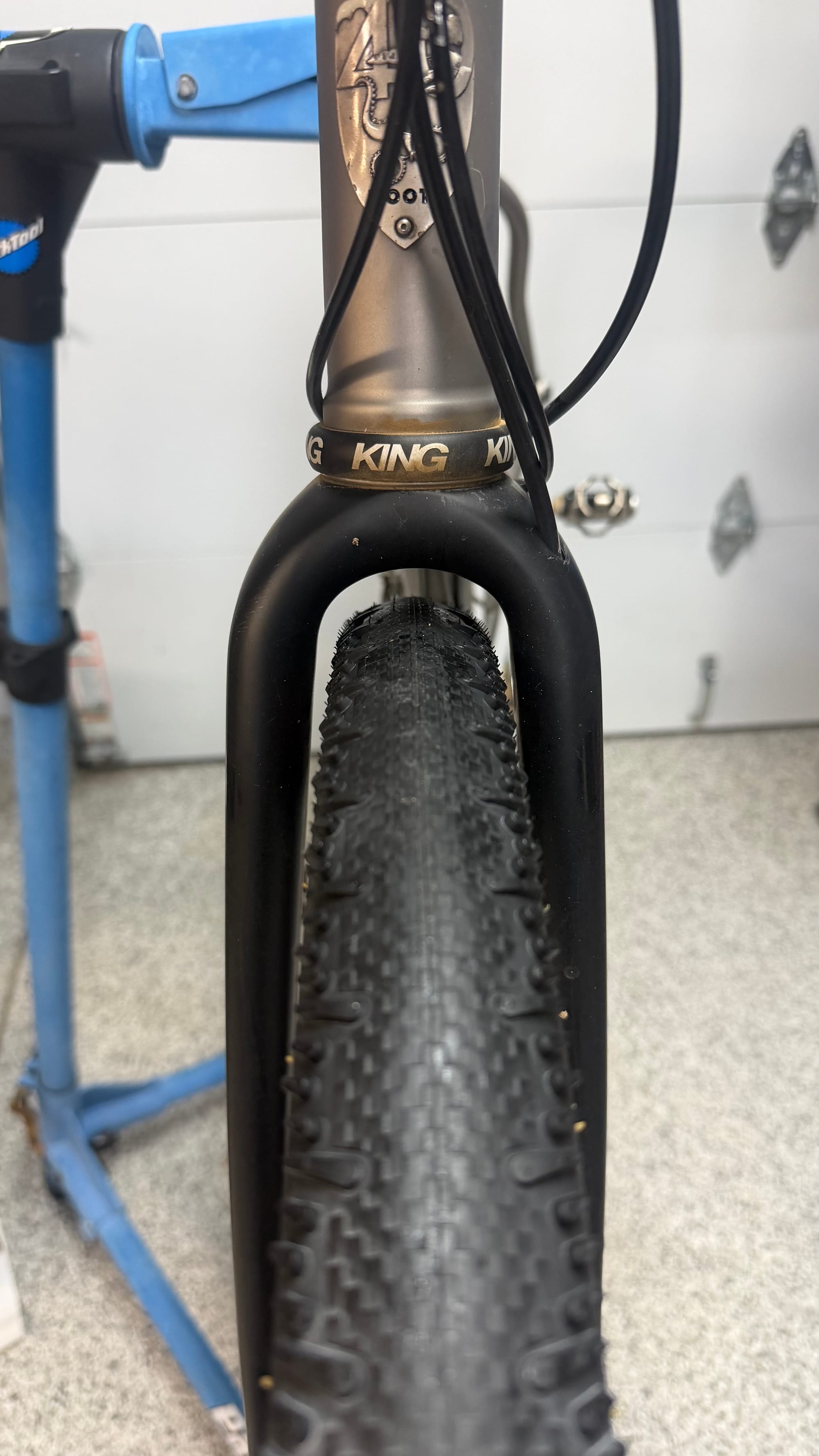
This question is exploding in popularity for a reason. On certain modern gravel frames, MTB tire clearance is now part of the design brief, not a hack.
But it’s important to be precise about what people mean by “MTB tires on a gravel bike.” Most riders doing this well are choosing fast-rolling XC tires, not aggressive trail tires. Think 29 x 2.1 to 2.35 inches with a low-to-medium tread pattern. That style of tire can roll surprisingly well, corners with real authority, and adds a level of composure that’s hard to match with traditional gravel casings when the route turns into underbiked singletrack.
Where it works best:
- Rough gravel routes that look and feel like XC terrain
- Descents with loose-over-hard corners
- Long rides where fatigue from vibration becomes the limiter
- “One bike” setups that need to handle a wide range of surfaces
Where it can feel like overkill:
- Fast group rides with lots of pavement
- Smooth hardpack where you’re already traction-limited by tread, not volume
- Bikes with tight clearance that leave no room for mud or wheel flex
If you’re considering “2.1 gravel tires” (which is really MTB sizing), clearance is everything. Tire labels aren’t standardized across brands, rims can change measured width, and “it fits” in the stand doesn’t always mean it won’t rub when things get gritty.
The real downsides of going wider
Wider gravel tires have real trade-offs, and it’s worth being honest about them.
You can add rotating weight. That affects acceleration and the “pop” when you punch up a short climb or sprint out of a corner. You can also give up some pavement efficiency, especially with knobbier tread. Even when rolling resistance is good, big tires can feel slower on the road simply because they’re louder, less aerodynamic, and less crisp.
Handling can change too. Wider tires often calm a bike down, which is great on rough terrain, but it can feel slightly dull if you like a quick, road-like front end. Pressure becomes more important as you go bigger, because a few psi can be the difference between planted and squirmy.
And again, clearance matters. The biggest tire you can fit on a gravel bike is rarely the listed number on the frame chart. Real-world fit depends on the specific tire, the rim, and how much safety margin you want for mud and flex.
Will wider gravel tires keep trending beyond this year?
Yes, but it won’t be a straight line where everyone ends up on 2.2-inch tires.
What’s more likely is that gravel continues splitting into categories. Race-oriented gravel will keep favoring “wide enough” tires that balance speed on mixed surfaces. Adventure and rough-route gravel will keep pushing bigger sizes, because that’s where the benefit is clearest. MTB tires on gravel bikes will stay a legitimate tool for specific terrain, not a universal default.
The bigger takeaway is that tire choice is becoming the primary way riders tune their gravel bike. With the same bike, you can build a fast all-road setup or a rough-terrain monster just by changing tire width, tread, casing, and pressure. That flexibility is exactly why the wider-tire trend has momentum, and why it’s not going to snap back to skinny tires anytime soon.